Refurbishing a plant stand
Two years ago I visited a local furniture consignment store in search of a chest of drawers. In a predictable turn of events, I did not find one but left with something else entirely: a dainty little plant stand. It was in a rather ghastly condition, with peeling varnish, scratches and scuffs revealing the wood beneath the stain. I had just started getting into woodworking and thought this would be a nice, quick refurb project (was I too optimistic? Perhaps).
Instead, it ended up in the garage while other projects took priority, most notably the bedframe project, followed by smaller, mostly self-inflicted repairs. At the start of the new year, I decided it deserved better. I cleaned it with Clorox wipes, as the underside had some mouldy splotches, and brought it into my room where it sat for a couple of weeks (silently judging me) before I finally took it to the woodshop.
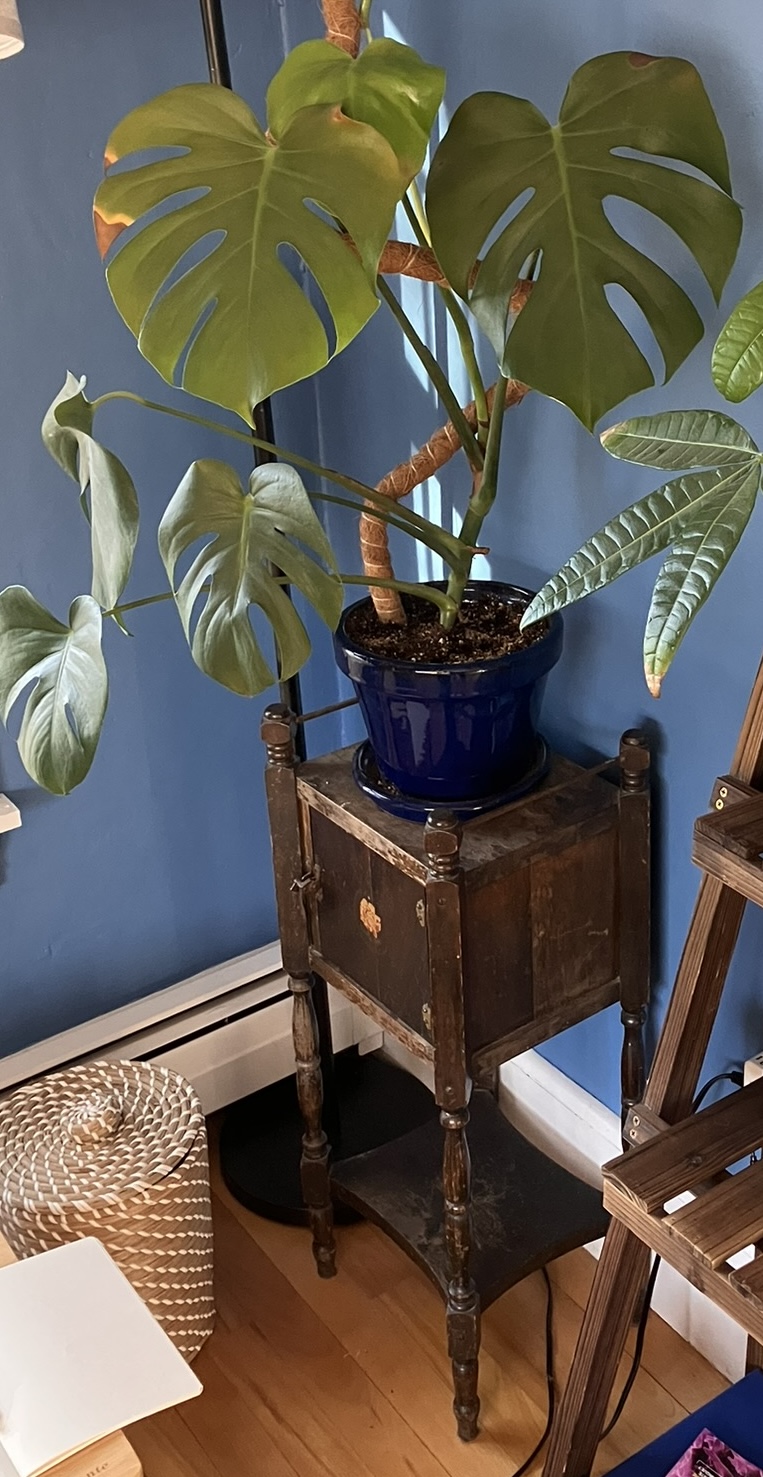
Elephant in the room
Upon disassembly, I discovered all the quirks of its design: four beautifully carved legs (possibly borrowed from a different piece of furniture?) screwed into a shelf and a small cube, whose top wasn’t even glued only held in place by the leg screws. Nothing was quite centred, and the lower shelf seemed motivated more by structural necessity than aesthetics (though it accidentally turned out rather lovely). The metal bars connecting the wooden “finials” were also a curious choice (I did not keep them).
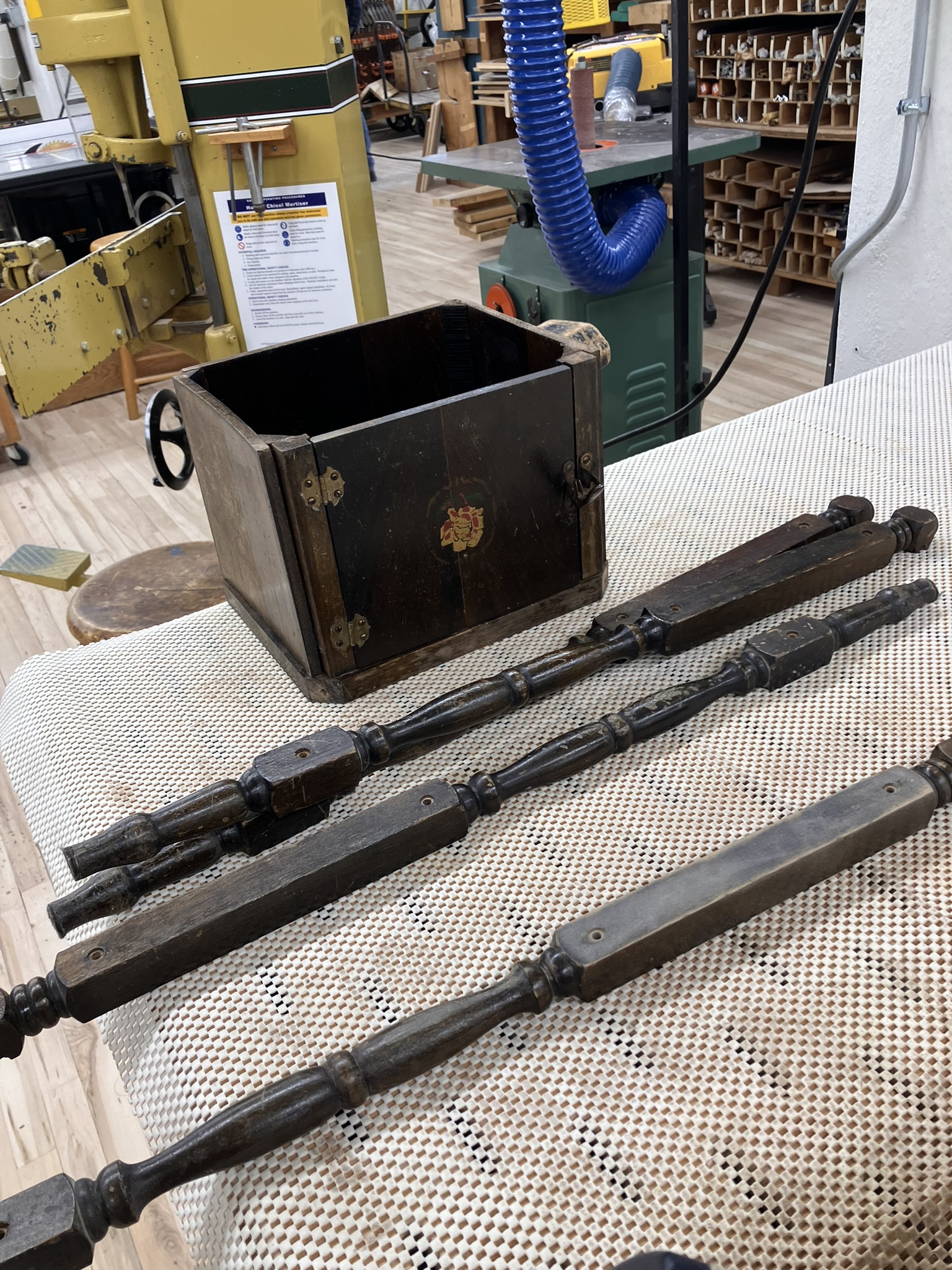
Next came the gruelling part. Sanding. As I worked on the flat surfaces with a circular sander, removing the peeling varnish, the natural wood colour started to show and it was lovely. I briefly considered sanding off the entire stained layer, then realised that would mean committing to ~ two months’ worth of sanding. Fortunately, the semi-sanded wood had a nice gothic feel to it, so I left it.
The legs proved to be the real headache at first. After a couple of hours wrestling with sandpaper and a collection of improvised moulds to fit the grooves, someone (thankfully) suggested using the lathe. It was not only substantially faster but also fun!
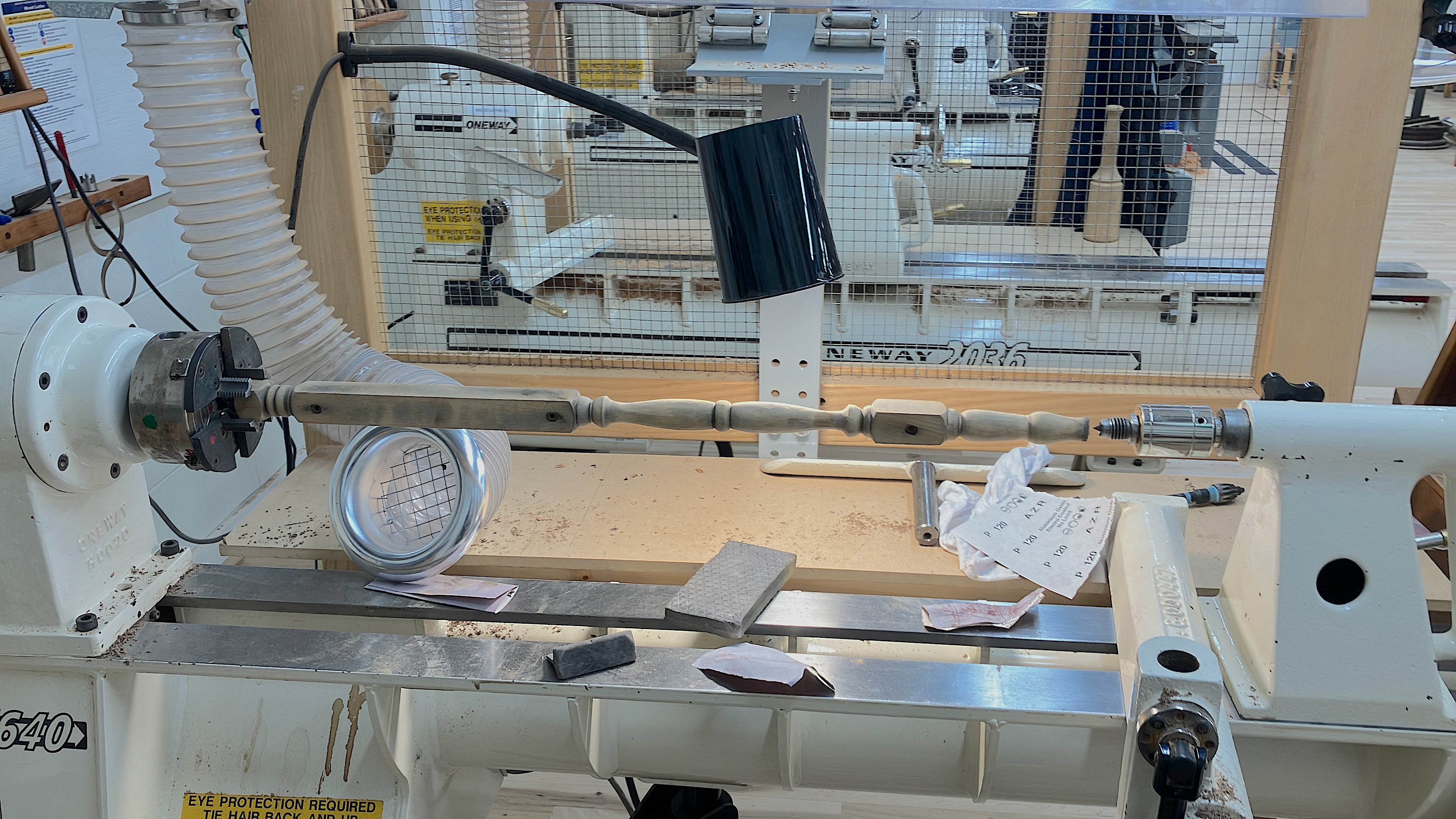
A leg on the lathe
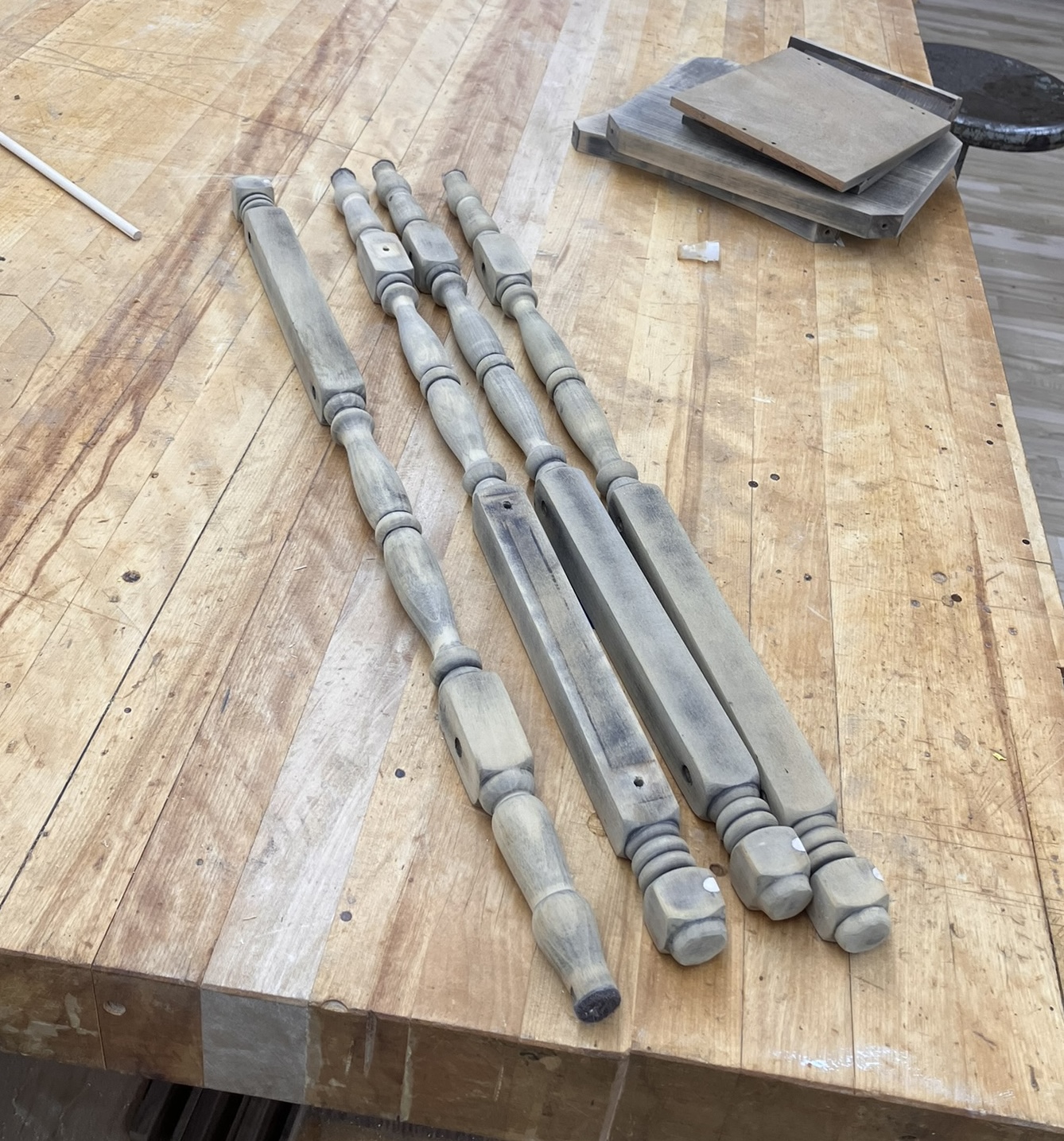
Eight hours worth of sanding in one image
After finishing all the parts with linseed oil the wood’s natural colour and grain really popped. We realized the door was made of mahogany in a bookmatched style, creating a mirrored V-shaped pattern.
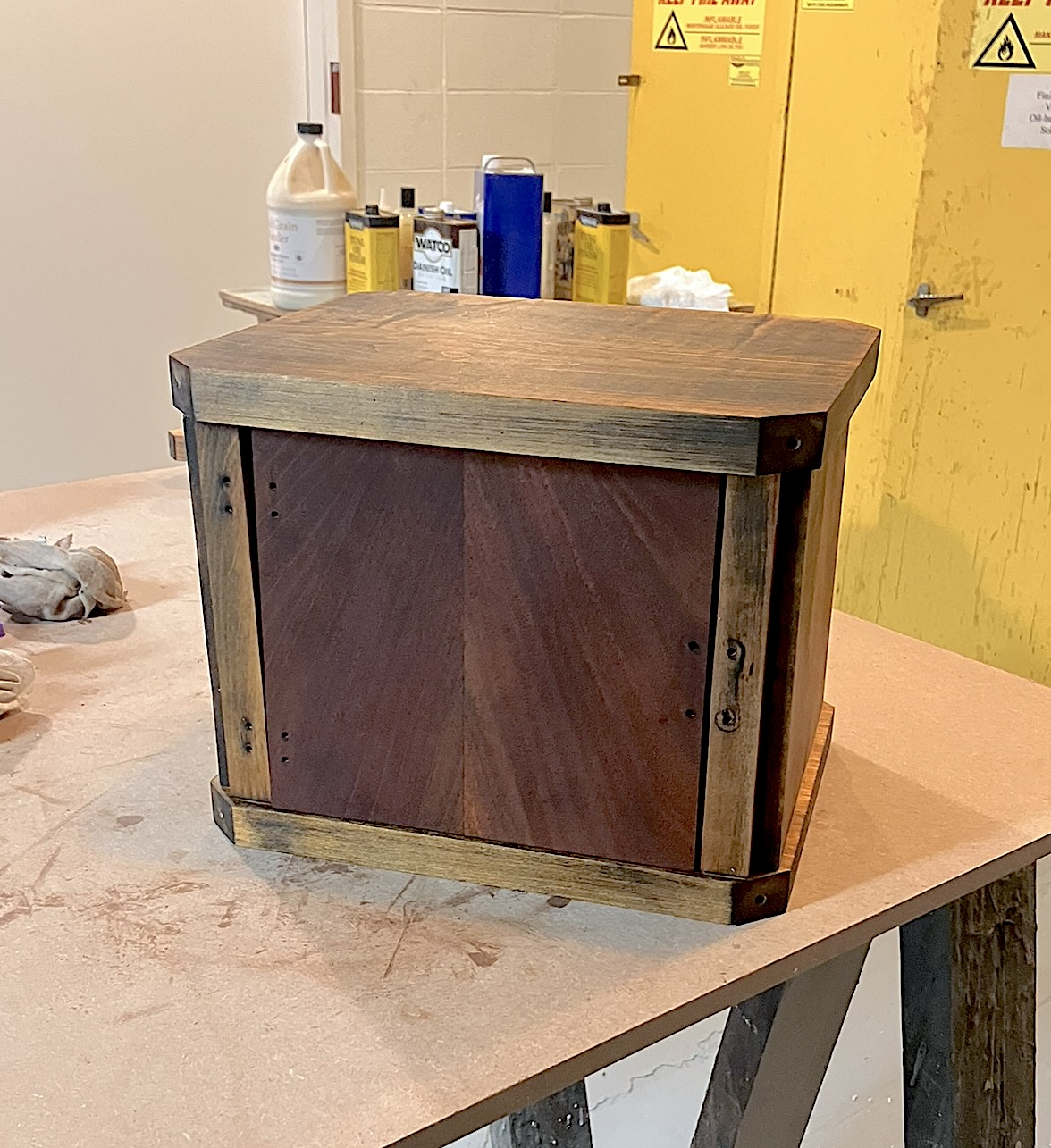
Beautiful colour of mahogany
I then spray-painted the screws and the ice-box latch on the door with hammered gold paint. Reassembly took another hour, partly because I made the beginner’s mistake of not noting which leg went where (and even carefully measured furniture can have subtle differences on each side… this was not a carefully measured piece of furniture).
However, once it was all back together, I couldn’t have been happier with the result, and the feeling this project left me with. Sure, I was glad to have a pretty plant stand at the end of it, but it also made me see maintenance and repair differently, especially when the object is made of good wood worth saving. It made me think of Zen and the Art of Motorcycle Maintenance; working on something with your hands can, in a small way, feel like setting something right in the world.
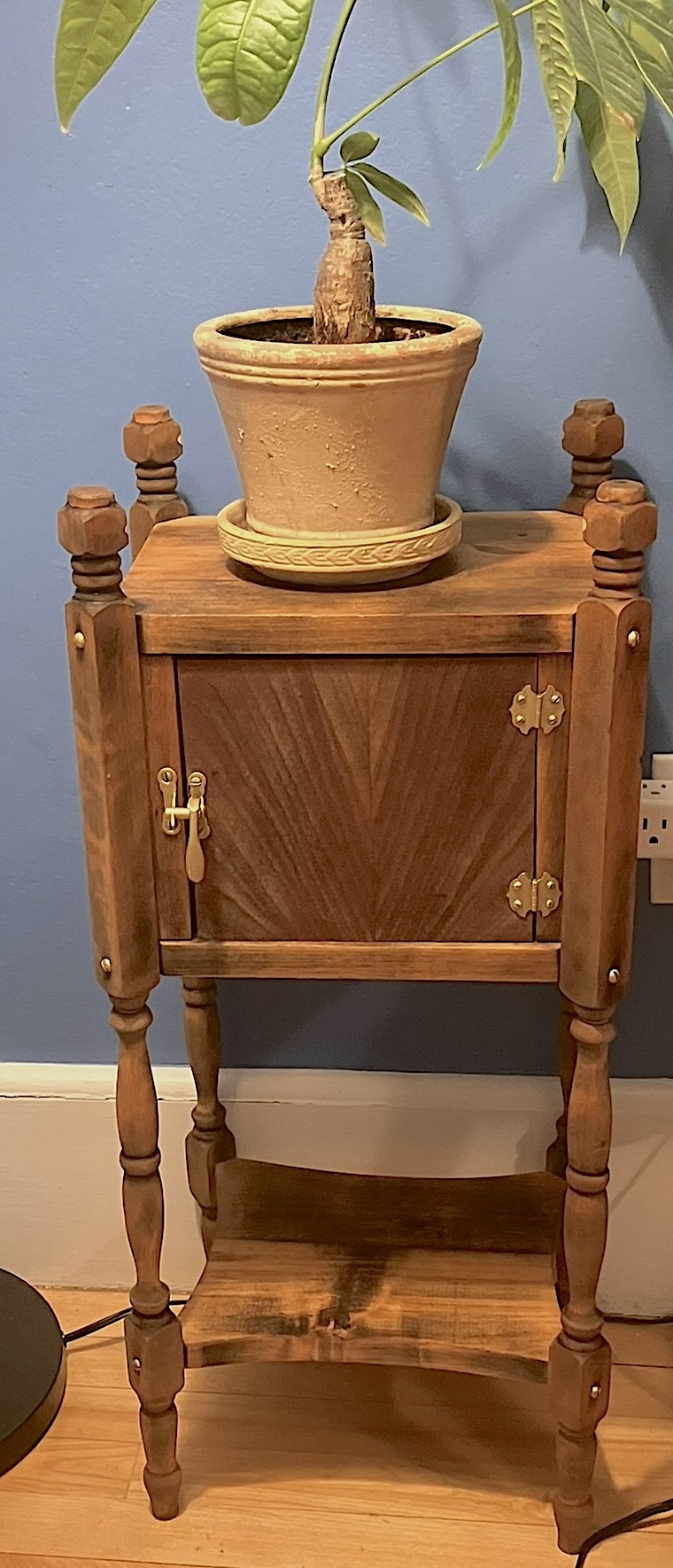
No longer an elephant